• Skip to primary navigation
  • Skip to main content
  • Skip to primary sidebar

GB Personal Training Ltd

Health, Fitness & Wellbeing

  • Workouts
  • About
  • Blog

18 Valslide Exercises from Beginner to Advanced

By Greg Brookes

18 Valslide exercises from beginner to advanced

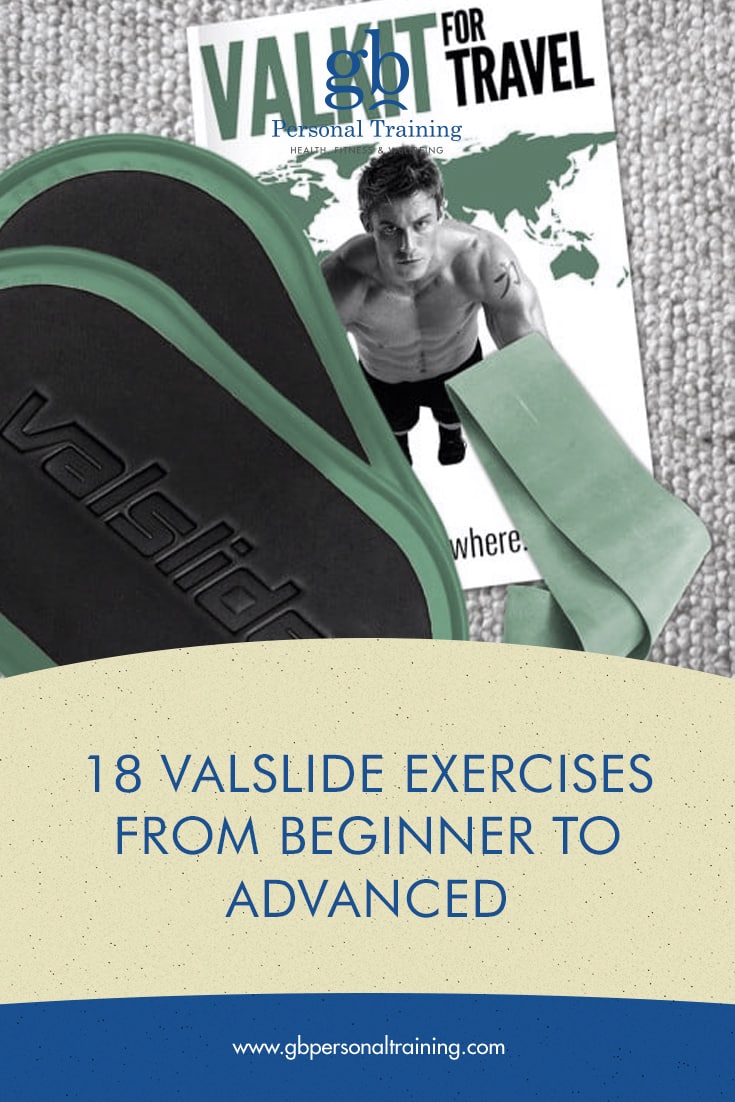
Valslides, created by Valery Waters, are an excellent addition to any fitness toolbox.

They are great for reducing impact during certain exercises or for intensifying Core and Abs exercises.

There are 2 types of Valslides that you can use, one is for use on Carpets and the other for shiny flooring like Wood, Stone or Vinyl.

Here are a list of my favourite Valslide exercises to get you started:


Beginners

# 1 – Fast Mountain Climbers

Valslide Fast Mountain Climbers

A nice introduction to using the Valslide. You will have one Valslide under each foot while in the Push Up position.

Next keeping your arms straight and core nice and tight you alternate sliding your knees to your chest.

Start off slow to get a feel for the movement and then work on picking up speed.

This exercise is not only demanding for your Core muscles but is also a great cardiovascular exercise.

Perfect for beginners because it takes the high impact out of the movement.

Try 30 seconds for a good pulse raiser!


# 2 – Reverse Lunge

Valslide Reverse Lunge Exercise

Performing a Reverse Lunge with a slider under the moving foot adds a different dimension to the regular reverse lunge.

As you bring the foot back through to the starting position you will notice that you will have to deal with the friction that the Valslide produces.

Be careful that during this movement you do not just slide backwards and forwards without dropping the back knee.

Remember you are still performing a lunge and not just a rear hip flexor stretch.

Work on one side first and then switch to the other side.


# 3 – Hamstring Curl

Valslide Hamstring Curls

This exercise is great for working into the hamstrings.

Start by lying on your back with both heels on the Valslides.

Next raise your hips and keep them up as you pull both heels in to your buttocks and then push them back out again.

When you first start this exercise you may want to just pull in one leg at a time.

Ensure that you straighten the legs at the end of the movement to fully lengthen the hamstrings.


# 4 – Slow Mountain Climbers

Valslide Slow Mountain Climbers Exercise

A beautiful Core exercise that works on stabilisation.

The exercise looks very similar to the Fast Mountain Climber except the knee is brought to the outside of the elbow.

The movement should be performed at a very slow pace allowing the Core muscle to engage correctly.

The slower you move the more difficult the exercise. Attempt to keep your hips as still as possible throughout the movement.


# 5 – Side Lunge

Valslide Side Lunge Exercise

One of the more difficult beginner exercises that requires good flexibility through the hips.

Starting from a standing position place one Valslide under your one foot.

Next slide that foot directly out to the side and push your hips backwards.

Keep your chest held high and back flat. Keep pushing your hips backwards and leg out to the side until your thigh is parallel with the floor.

Pause and then return to the starting position. The deeper you drop into the lunge the more you engage your buttocks.


# 6 – Forward Lunge

Valslide Forward Lunge Exercise

Very similar to the Reverse Lunge but moving forwards. You will find this lunge variation more difficult that the Reverse Lunge.

Using a Valslide for the Forward Lunge teaches you to load the back leg in a different way because overloading the Valslide would throw you off balance.

The friction produced from the Forward part of the lunge is also something that you would not usually have to deal with when performing a regular Forward Lunge.


# 7 – Clock Lunge

A great exercise to finish of the beginners section.

The Clock Lunge works your Lunge pattern through all the different movements listed above.

Start by performing the Forward Lunge with the right leg, then the Side Lunge with the right leg, and finally the Reverse Lunge with the right leg.

Next switch legs and perform the Reverse Lunge with the left leg, followed by the Side Lunge with the left leg and finally the Forward Lunge with the left leg.

Next switch legs and repeat.

You will notice that you are Lunging around a clock in a clockwise direction: 12, 3, 6, 9 and 12 O’clock.


Advanced

# 8 – Squat Thrust

Valslide Squat Thrust Exercise

Another good cardiovascular exercise that works the Core hard too.

Set yourself up as if you are about to perform the Fast Mountain Climbers.

Next with both feet on the Valslides pull your toes into your chest and then back out again.

Keep your Core tight and ensure you complete the full movement to straighten your legs at the end.

A great exercise if impact is a problem for you.

Try 30 seconds without stopping to really get your heart beat racing.


# 9 – Double Lunge

Valslide Double Lunge Exercise

One of my favourite Valslide exercises for testing the legs.

You will have your foot on one Valslide and then imagine that the other foot is stuck to the floor.

Next slide backwards into a Reverse Lunge and then Forwards into a Forward Lunge.

Keep the pace fairly brisk and ensure that your knee gets as close to the floor as possible for every repetition.

One repetition counts as forwards and backwards.

Try 10 on each side for a nice leg workout.


# 10 – Alligator Walk

Valslide Aligator Walk Exercise

This tasty exercise works both your Core muscles and your shoulders too.

I like the shoulder stabilisation that is required to perform this exercise correctly.

Start in a Push Up position with your feet on the Valslides.

Next with your Core engaged and back nice and flat start dragging yourself forwards on your hands.

Only move your hands as you continue to walk forwards dragging your legs behind you.

Find some room and move forwards for 10 and backwards for 10. If your hips start to sag towards the floor then stop the exercise.


# 11 – Hand Slide Outs

Valslide Arm Slide Outs Exercise

Very powerful Core exercise that can be modified depending on strength.

Start in a Push Up position with your hands on the Valslides.

Next taking it in turns slide your one hand out forwards as far as possible.

Next return the hand slowly and repeat on the other side.

The crucial part about this exercise is keeping the Core engaged and the back flat.

Only slide your hand as far forwards as you can manage with good form.


# 12 – Reverse Lunge with Overhead Reach

Valslide Reverse Lunge with Overhead Reach

A nice full body movement that lengthens the back and mobilises the rear hip flexors too.

Perform the regular Reverse Lunge as mentioned in the beginners section.

As the back knee drops down into the lunge reach up with both hands and look up at the same time.

Next bring both arms down as you drive from the front leg back into the standing position again.


# 13 – Plank Slide Outs

A demanding Core exercise that requires a good deal of foundational core strength to begin with.

Start in a regular Plank position with your feet on the Valslides.

Next keep your Core engaged and hips up as you slide your feet backwards.

Slide your feet back as far as your Core muscles can handle before sliding back to the starting position again.

If you are new to this exercise work on only sliding backwards and forwards a few inches before really going for it.


# 14 – Push Up to Squat Thrust

Valslide Push Ups to Squat Thrust

A nice Valslide combination exercise that starts with a regular Push Up and then adds in a Squat Thrust.

Begin the exercise in the Push Up position with the feet on the Valslides.

Perform a single Push Up and then when back at the top of the movement pull the knees in and out for a Squat Thrust.

Keep the pace steady and don’t sacrifice your form for speed.

Keep that core tight and your hips up.


# 15 – Cross Body Mountain Climbers

A similar Core exercise to the Slow Mountain Climbers but this time a little more focused on the Obliques.

From the Push Up position with the feet on the Valslides take the knee underneath the body and as close to the opposite elbow as possible.

Return the leg to the start position and repeat on the other side.

Keep the movement slow and controlled.


# 16 – Pikes

A nice core exercise that demands good core stabilisation as well as hamstring flexibility.

Start in a Push Up position with both feet on the Valslides.

Next keeping your legs straight pull your legs in towards you and push your buttocks up into the air.

Try to get your feet as close to your hands as possible without bending your legs.

Next slowly slide your feet back into the Push Up position.


# 17 – Side Plank Reach Through

This Core exercise works the side of the body as well as your Upper Thoracic mobility.

Start in a Side Plank position with your top hand on a Valslide.

Next sliding the Valslide along the floor take the hand underneath the body as far as possible.

Rotate the body as much as possible as you reach through.

Next pull the arm back through and start again. Move slowly throughout the exercise and keep your hips nice and high.


# 18 – Push Up Slide Outs

This exercise takes the regular Push Up to the next level and really challenges the one side of the Chest and Triceps.

Start as with a regular Push Up but with both hands on the Valslides.

Next as your descend down into your Push Up slide one arm out to the side as far as possible.

As you push up from the bottom of the push up return the arm back to its original position.

You can either work on one side for a certain number of repetitions or switch sides after every rep.


Loaded Exercises

The above selection of exercises require no equipment other than the Valslides.

You can, when you are comfortable with the Valslides, start to add loaded movements like Reverse Lunges while holding Dumbbells or a Kettlebell.

Take your Valslides with you wherever you go, I don’t think you will be disappointed.

Have you tried using Valslides yet?
Everything You Need to Know About Post Natal Fitness from A-Z

By Greg Brookes

postnatal fitness
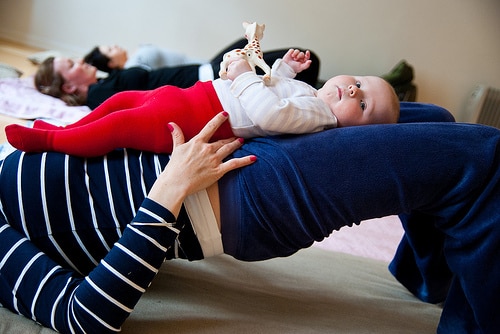
Image by Aktiviosio

(This is Guest Post by Angela Hope of Hope Fitness)

A is for Abdominals

The baby belly – top of every new mum’s hit list and the part of their body they most desperately want to fix after pregnancy. Restoring the core is one of the most important steps you should take during the postnatal period and you should start as soon as possible after giving birth.

The abdominal muscles are made up of four layers which need to be strengthened from the inside out. The deepest and most important layer is called the Transverses Abdomis (TvA), which acts like a girdle around your middle. Make this strong and you will be making giant steps towards getting your waist back, having a flat tummy and an improved posture.

The next two layers are the Internal Obliques and External Obliques. These allow you to flex and rotate and give you that much sought-after pinched waistline. Finally we have the Rectus Abdominis, commonly known as the six-pack. These help flex the lower back and also assist breathing.

B is for Baby

Your beautiful little bundle of joy, your reward for 9 months of hard work. Unfortunately it will take at least another 9 months to fix the damage! Don’t use the baby as an excuse though; go out for a walk with the pushchair or put on the Davina DVD. Your little one will love watching you jump around your living room!

Although you may not feel like exercise as your time is so precious and you are very tired, however, exercise will re-energise you, help you sleep better, improve your ability to cope and give you some much needed ‘me’ time.

C is for Caesarean

A c-section is a major abdominal operation so the first 6 weeks after giving birth should be seen as a healing phase. During this time the only exercises you should be doing are pelvic floor exercises (equally important for both c-section and natural deliveries) and when you feel ready, gentle lower tummy exercises.

Under no uncertain terms should you be doing any lifting or impact exercise. Aim to stand up straight during the healing phase as it can become a habit to stoop to protect your stitches. However, the gently flex of standing tall will actually aid healing.

Gradually build up exercise by beginning a light walking programme, starting with 5 minutes and building up to longer walks, preferably at least 30 minutes 3 times per week. Look after yourself during this healing phase and you will be back on your feet quicker. Do the opposite and you can set yourself back weeks.

D is for Diastasis Rectii

Abdominal separation, a fairly common condition of pregnancy and the postnatal period, in which the right and left halves of the Rectus Abdominis muscle spread apart at the body’s mid line fascia, the linea alba. A gap of more than 2cm (approx 2 fingers width) is considered to be a problem but can easily be corrected using the right exercises.

Contrary to popular belief, abdominal crunches will not help you restore your pre-baby tummy and are more likely to make it worse! To help prevent or lessen the severity of diastasis recti it is best to focus on the TvA muscle, the body’s natural girdle. Activate this muscle by breathing and pulling your tummy button towards your spine. Continue to hold while breathing out.

E is for Energy

A good balance of regular exercise, healthy eating and plenty of rest will help keep your energy levels up. The right exercise can energise you, make you sleep better and help you to make better food choices. Look after your baby by looking after yourself.

F is for Feeding

If you are breast-feeding, make sure you feed your baby before exercising so you are more comfortable. It has also been shown that vigorous exercise can mean a build up of lactic acid in your milk so wait 20 minutes after exercise before feeding again. This won’t effect your baby at all, it may just make your milk taste funny!

G is for Glutes

The big muscles in your buttocks… the rock that holds your pelvis, hips and abdominals together. Often these muscles are very neglected as we spend a lot of time sitting on them! Allow these muscles to work properly and they are a vital component to your whole body strength, particularly your back.

H is for Hips

During pregnancy the hip flexor muscles (at the front of the hips) become tight due to the postural changes in your body – the growing uterus causes the pelvis to tip forwards. In addition, the body produces the hormone Relaxin, which softens the ligaments in your pelvis and other joints, to help you to give birth. This makes the whole pelvic girdle unstable and can often result in pain around the hips joints and pelvis.

After pregnancy it is important to remobilise the hips and focus on stretching out the tight hip flexor muscles.

I is for Iron

Once you have given birth, your iron requirements are greatly reduced. However, during this important rehabilitation stage it is important that your iron intake is adequate, as lack of iron can make you tired and more susceptible to postnatal depression.

Try and eat plenty of iron-rich food such as red meat, fish and poultry. Iron is also in green leafy vegetables and pulses although it is harder for the body to absorb. Drink a glass of orange juice, high in Vitamin C, with a meal to help absorb more iron.

J is for Jubblies

Breasts usually increase by at least one cup size during pregnancy and postnatally, especially if you are breast-feeding. Because your breasts will be much heavier, it is vitally important that you wear a supportive bra, especially when exercising. A sports bra specifically designed for exercising will give you the support you need and minimise discomfort.

K is for Kegels

Everyone should be doing their pelvic floor exercises, none more so than postnatal females. During labour the pelvic floor muscles will have become very overstretched and exercises to get these back in shape should be the first thing you do after giving birth. They will not only help with incontinence and hemorrhoids but also aid your postnatal recovery.

Find a trigger in your everyday life that will help you to remember to do them; boiling the kettle, feeding your baby, brushing your teeth.

L is for Lower Back

Many postnatal females have lower back problems beyond pregnancy, usually due to the hormone relaxin that is still in the body causing instability in the ligaments and joints around the hips and pelvis in addition to weakness in the core and glute muscles.

Your posture takes a while to get back to normal and you spend a lot of time lifting; the baby, a car seat, a pushchair, a toddler, all of which can exasperate a problem. In most cases exercise can be used to both alleviate these aches and pains and also restrengthen the weak muscles over time. Consider your posture at all times when walking and lifting and if possible treat yourself to a massage to soothe the aches and pains.

M is for Mobility

Keeping mobile keeps you young. We spend so much of our time sitting that most of us are unable to move properly. For example, during pregnancy, the hip flexor muscles can become very tight due to the extra weight in the pelvis. Here we often find that the lower back compensates for this, causing pain and discomfort. It is important to spend a little time each day working your joints through a full range of motion. Start at the top with the neck and work down to the ankles.

N is for Nutrition

“You can’t out exercise a bad diet”. Most of us know what we should and shouldn’t be eating but most of us find this difficult to adhere to. However, small changes can make a big difference. It’s difficult when you are tired and you have a baby to look after to remember to eat properly but all it takes is a little preparation and some forward planning.

Always start with a filling and nutritious breakfast, this will set you up for the whole day and prevent hunger later on. Drink at least two litres of water daily. Eat as many fresh, natural products as possible daily; fruit, vegetables, meat, eggs, fish.

Eat little or no refined carbohydrates; white sugar, white bread, white pasta, cakes, biscuits. Eat more wholegrains; brown rice, brown bread, oats. Cut down caffeine; no more than three cups of tea or coffee a day. Cut down alcohol; no more than two units (one drink) per week.

O is for h2O

Water is the one thing that we can not live without. Keeping well-hydrated is one of the most, THE MOST, important things you should be doing for yourself. Two litres of plain, fresh water per day should be your aim (preferably filtered or bottled).

It is difficult at first, you will probably find it a struggle to drink that much water during the day, with frequent trips to the WC! However, it does get easier as it becomes a habit. Aim to drink a glass first thing in the morning before anything else.

P is for Plank

The Plank exercise is a static exercise that works your whole core, particularly the deep stabilising muscles. You use your arms to raise yourself off the floor and hold the whole body straight and rigid, like a plank of wood. You can do it anywhere, you don’t need any equipment and it only takes a minute. What’s more, it is more effective than sit-ups and crunches because these work only the superficial abdominal muscles.

There are three variations of the plank that target different areas of the core; the basic plank, the side plank and the sky diver. The plank is highly effective core exercise however, do not attempt the plank if; you have diastasis recti, are still recovering from a c-section or have lower back problems.

Q is for Q Angle

This is the angle between your hip and your knee. A “normal” Q angle is 14cm for males and 17cm for females. Females usually have a higher Q angle due to their naturally wider pelvis. Your Q Angle will increase during pregnancy as your hips widen to give birth and may never return to their pre-pregnancy state.

Unfortunately a higher Q angle can often result in knee pain. This is why it is important that a postnatal exercise programme redresses the balance of pregnancy and post-pregnancy induced changes, and restore the ‘ideal’ posture. It is essential to learn how to utilise the the deep stabiliser muscles in the core and re-align the body through the strength and stretch of opposing muscles.

R is for Relaxation

Relaxation is an important part of good health, vital for maintaining clear-mindedness and overall wellness. Make time for it every day, and develop a relaxation technique that deeply relaxes you quickly. Find a way to make some ‘me’ time every day, whether it is a hot bath, an exercise or yoga session, reading a book or magazine or just a quiet lay down.

S is for Squats

Love them or hate them they are a great exercise for working your whole body, primarily the big muscles in your thighs, hips and bottom. Squats strengthen your knees and ankles and all the supporting tendons connecting them. They help your balance and keep you mobile.

Squats also strengthen your core as both the muscles of your abdomen and your lower back are utilised to hold and balance the weight throughout the movement. This strengthens both your posture and balance, as well as assists your body in performing everyday physical tasks. Finally, if the big muscles in your body are strong and lean, this increases your metabolism so you burn more calories at rest.

T is for Transversus Abdomnis

The Transversus Abdomnis (or TvA for short) is the deepest lying abdominal muscle and probably the most important. Forget the 6 pack, this is just the icing on the cake. Make the TvA strong and you will have that flat tummy and pinched waist you always dreamed of. The TvA is a natural “girdle” around your middle and supports the abdomen and lower back.

If you don’t know where your TvA is or what it feels like to contract it then try this. As you breathe in, pull your tummy button towards your spine. As you breathe out, continue to hold your tummy in. This is your TvA working. Repeat this exercise throughout the day especially when you are walking or lifting.

U is for Unfit

You may be feeling unfit after having a baby but actually pregnancy has an amazing training effect on your cardiovascular system. Your heart and lungs have been worked out really hard to grow and support your little one for 9 months. The amount of blood circulating around your body increases, increasing blood pressure and resting heart rate, making the heart work harder.

Your lungs will have been taking in more air per breath to assist the heart and send more oxygenated blood around the body. This is why, with the right balance of exercise and nutrition, you can take advantage of this training effect and be fitter and healthier than ever before.

V is for V Sits

Once you have restored a base level of strength back in your core, try this simple but effective exercise for toning the abdominals, the obliques and the lower back muscles. V Sits are very physically demanding but done regularly can reduce fat and increase core strength in your torso. Begin in a seated position, contract your abdominal muscles and core, and lift your legs up to a 45-degree angle.

Reach your arms straight forward and maintain good core posture and a strong spine. Hold this “V” position for several seconds to begin. As you get stronger, hold the position longer. Return to your starting position slowly. Just before you reach the floor, stop and hold the position for a few seconds. Repeat this entire movement several times.

W is for Walking

Simply the best postnatal exercise. It’s free, it’s safe, you can take baby with you and the fresh air will do you both good. As soon as you feel able to after giving birth, begin by doing a gentle daily 10 minute walk, gradually building up to doing three 30 minute power walks per week. For it to be really effective you need to make sure you get the heart pumping.

The best way to do this is to walk up a hill. Not only will you really get that heart rate up, which will burn fat and tone that wobbly bottom, but it will also help to strengthen the muscles surrounding the pelvis that are still weak from pregnancy. How about trying a Buggy Workout class and join like-minded mums?

X is for X Training

Variety is the spice of life as they say so why not add something different to your fitness regime. During the postnatal phase make sure you go for an activity that is low impact, until you have built up strength in your hips and pelvis once again. Swimming is an excellent form of postnatal exercise as there is no stress on your joints. When you’re feeling a bit stronger why not try Zumba. Check out your local classes.

Y is for Yoga & Pilates

Both these type of classes restore the strength of the abdominal muscles and the pelvic floor muscles, help to reduce fatigue, energise the body and calm the mind, improve posture and open the chest, strengthen the back and shoulders and re-establish core stability.

Above all else they offer a rare chance for peace, quiet and to truly relax! Most classes can be easily adapted for postnatal but make sure you let the instructor know that you are. Better still, do a class specifically aimed at postnatal. Try and find a class with fewer numbers so that you get more one-to-one attention from the instructor.

A good yoga or Pilates class with an experienced teacher is an excellent form of postnatal exercise however, if done incorrectly can do more harm than good.

Z is for ZZZ’s

Sleep. One thing you need most for your health and well-being but one thing you probably lack most. It is important for your postnatal recovery that you get enough, good quality sleep to ensure that your body balances out fat-burning hormones, reduces stress and levels of cortisol, which make the body cling to fat.

Not sleeping properly disrupts the hormone leptin, which controls appetite and metabolism, so when you are sleep-deprived you will tend to eat more. Unfortunately when babies are born they take a few weeks, months, maybe even years to learn to sleep through the whole night. Try to stock up on as much sleep as possible, taking 15 power naps during the day and making sure you get an early night.

For more about Angela’s services visit Hope Fitness


How to Reduce Belly Fat in 2013: I Asked Over 4700 Personal Trainers

By Greg Brookes

I asked over 4700 Personal Trainers and Fitness Professionals this one question:

“What is your Best Advice for Reducing Belly Fat?”

Image by Vipez…..NOT everyone is Lovin It

I stipulated that I wanted a little more than just increasing exercise and reducing calories. After all we know this already right?

I think you will find some interesting answers below, some I agree with and others I’m not so convinced. I’ve also included my answer at the bottom of the page.

Enjoy!

Jessica Rapp, Personal Trainer Unique Physique for Life


Less Stress =Better Sleep=Better Workouts=Cleaner Eating=Reduced Belly Fat & Overall Fat!

  1. Don’t sweat the small stuff
  2. Aim for 8 hrs of sleep per night… a better rested YOU will be less stressed & less likely to over eat.
  3. Physical activity such as metabolic training involving all muscle groups and cardiovascular training into one workout 3-4 times per week.
  4. Include one day per week of Core Training for 30-45 min straight. (results are as noticeable in core as very next day)
  5. Eat clean, NO processed foods!  Keep calories within your daily allowance!

Visit Jessica’s website: www.uniquephysiqueforlife.com

Sandra O’Hagan, Personal Trainer  So Full of Life


Since you cannot spot reduce belly fat, it is important to reduce fat on your entire body and my recommendations are:

Weight Train, Green Smoothies, Decrease Stress…but wait, there’s more…

 It is essential to reduce processed food and alcohol and consume fresh fruits, vegetables, high quality protein and healthy fats and adding a green smoothie (spinach, fruit, avocado, chia, flax, hemp, ginger, water and any other super foods you like) can provide excellent nutrients, detox and antioxidant properties as well as keep you satiated and provide great energy which will make it easier to say NO to other unhealthy choices.

Ditch the Barbie weights and lift to build muscle and rev up your metabolism.  Do full body workouts combining weight training and cardio into circuit training for an excellent way to blast the fat that collects around your middle.

When you feel great you do great and that helps you eliminate the stress that can cause you to hold belly fat.

Visit Sandra’s website: www.sofulloflife.com

Rose Scott, Health & Wellness Coach and Personal Trainer

  1. The first and foremost is that you must have the right mindset and really want to achieve this goal.
  2. Proper nutrition is vital as what we eat reflects what we become, “we are what we eat” therefore eat healthfully of good sources of protein, vegetables and limit fat, carbohydrates and eliminate sugar in all of its forms.
  3. Sleep is important for regeneration of cells and body metabolism.  People that do not obtain adequate sleep binge late at night on unhealthy food.
  4. High interval intensity exercises burn fat.  Also try doing other exercises such as planks and core strengtheners that force you to “suck in that gut”.

Visit Rose’s website: www.riseabovewithrose.com

Alex Robinson, Personal Trainer Twickenham

Exercise and Diet will in most people get results, and specific’s can be altered to achieve perhaps greater results, although frankly this method is a bit ‘hit and miss’. If a client is paying a premium for a service to reduce specifically belly fat then a programme taking into account their Oestrogen levels, one which will promote the storage of fat cells in the abdomen, how well their gut is functioning and testing their Cortisol, Leptin and Ghrelin levels will make sure your client achieves outstanding results.

Visit Alex’s Website: www.stokehealth.com

Nadja Lewis, Personal Trainer Los Angeles

Change your diet (eating patterns) and your exercise routine (if you have one).  Cut down on salt and sugar intake, increase w/foods that will keep you feeling ‘full’ for longer such as veggies, fruit, and include some fiber.

Get enough sleep and handle your stress (don’t let it handle you).  Stress sometimes leads one to turn to ‘comfort foods’…instead drink more water.

Exercise FREQUENTLY…and CONSISTENTLY.  It’s nice to ‘tighten’ up your abs/stomach muscles, however working the core (the plank is an EXCELLENT exercise) really helps to ‘shape’/reduce your belly fat if done CORRECTLY.

Visit Nadja’s website: www.fitnessbynadjalewis.com

Angela Hope, Pre & Post Natal Fitness Specialist Ipswich

To begin reducing belly fat immediately: Eat clean – cut refined carbs, caffeine, alcohol and processed food from your diet. Sleep well – have 8 hours good quality sleep every night. Stay hydrated – drink at least 2 litres of filtered or bottled water daily. Exercise regularly – be consistent but mix it up, just have fun!

Visit Angela’s website: www.hopefitness.co.uk

Pete Luffman, Bristol Personal Trainer and Kettlebell Club

My top tip to reduce belly fat is to take longer breaks between eating meals, effectively going into a semi short fast. During this fasting period wonderful things will happen to your body, like switching to burning fat to fuel your activity, stabilise hormone secretion, improving insulin sensitivity, and a whole host of other health benefits. 

Plan your exercise sessions to commence towards the end of this fasting period to further enhance your results. Bare in mind this will only work if you are currently eating to support your metabolism, eating from natural whole food sources (no junk or fast food), and you are controlling portion size.

Visit Pete’s website: www.mybristolpersonaltrainer.com

Joey Shillolo, Personal Trainer Canada

Eliminate sugar and manage your carbohydrate intake.  Fat loss is a hormonal process and I teach all my clients to understand the role of insulin as the chief mediator of fat storage.  Knowing what foods have the greatest impact on insulin (ie simple sugars and processed carbohydrates) is key to loosing belly fat and keeping it off.

Visit Joey’s website: www.js3pt.com

Tracy Steen, Inside Out Fitness

Increase your metabolism, and your body will burn fat FOR you! The #1 way to do that? Increase your lean muscle tissue.  In other words, pump some iron ladies!

Visit Tracy’s website: www.insofit.com

Mr. America Jason Kozma, Los Angeles Personal Training

First you’ll need to eliminate all simple carbohydrates from your diet while you are trying to reduce belly fat.  This includes not just candy and alcohol, but fruit, juice and carbs that break down quickly like pasta and bread.

For exercise, you’ll of course need a full weight training and cardio regimen. Add fat burning cardio for an hour 6 days per week and you should train your abs with 3-4 exercises, 3-4 sets each, 3 times per week on nonconsecutive days.

Visit Jason’s website: www.lapersonaltrainer.com

Michael Caulo, Personal Trainer and Certified Fitness Nutritionist

Most people know that exercising and eating clean will help reduce body fat.  Sometimes exercise and eating the right foods aren’t enough especially when dealing with reducing fat in the mid section.  Now I’m not here saying that you can target fat loss because that is not how the body works , but you can guide your body in the right direction by doing the right things.  

If eating clean and exercise aren’t enough you can add supplements into your nutrition plan that can aid in metabolizing fat which will help burn fat off your body and thus reducing the fat on your belly.

Two supplements that have been associated with breaking down stored fat and allowing it to be used for energy are gamma linolenic acid (GLA) and L-carnitine (Amino Acid).  Both allow for your body to use its fat cells as a source of energy instead of your carbohydrate intake for the day which only burns food eaten that day but doesn’t directly break down and lose fat on your body.

Visit Michael’s website: www.lifeofafighter.com

Rich Blackburn, Personal Trainer Harrogate and Martial Artist

Change your breakfast to a protein breakfast.

Carbohydrates such as cereals for example, have a strong effect on your body’s insulin production, especially after a period of fasting (sleeping).

Your Insulin levels spike, and sugars are drawn out of the blood and stored  elsewhere as fat.

By having a protein breakfast you are starting your fat burning furnace, but not spiking your Insulin levels.

Visit Rich’s website: www.360totalfitness.co.uk

Igor Toronto, Personal Trainer

Balance your hormones

Your Hormones determine your body fat much more than calories (although calories still count). The first steps to balancing hormones are to improve your nutrition, manage your stress better, and improve the health of your digestive system.

Take care of those 3 things, and you’re well on your way to a flatter belly.

Visit Igor’s website: www.TorontoFitnessOnline.com

Chris Janke-Bueno, Personal Trainer My Core Balance

My recommendation is to focus on health first and fitness second. For the workouts, I highly recommend high intensity interval training. But what you do on your off days is probably more important. When you’re exercising at a high intensity, recovery is key.

Drink at least 1/2 gallon of water a day. Eat a huge salad daily for lunch. Take warm baths and try to relax. Get to bed by 10:30. And perhaps most importantly: make sure you’re doing some sort of balancing exercises, whether its Yoga, Pilates, or Core Balance to ensure that you don’t overtrain.

Visit Chris’ website: www.mycorebalance.com

Brian Underwood, FMS Expert and Nutritional Specialist

I’ve competed in 3 Natural bodybuilding shows so honestly, it’s 100% diet!  I don’t honestly agree with calories in, calories out because I feel that any excess protein will turn into waste and excreted.  I could have 3 twinkies all day and yes, I’d lose wait but if you continue this practice you’ll begin to lose LBM bc your body will go into starvation mode. Those are also empty calories with low amino acid profile. 

Amino acids should be the #1 macronutrient ingested for any goal.   Yes, your activities of daily living are important too.  Moving rather than sitting will help facilitate the weight loss.

Bryna Carracino, Personal Trainer

The best way to reduce belly fat is controlling what foods you put in your Body. 80% of getting fit and staying there is food consumption. The other 20% is exercise…  I tell my clients you want a six pack eat clean! Don’t eat anything from a bag, can or box. Eat unprocessed foods, Lean proteins, veggies, fruits, good fats and whole grains. Keep it balanced keep it clean.

Visit Bryna’s website: www.itrainwithbryna.com

Heather Lowe HBK, CPT, CFC Personal Trainer at Heat Fitness

The best way to help reduce belly fat is by eating less dairy and breads. These foods go straight to your abdomen and make you look bloated. By avoiding these foods in your diet you will see a great improvement to your stomach.

For the best exercise, I would say the plank as it targets all of the muscles in the abdomen and helps to keep the rest of your body strong 🙂

Visit Heather’s website: www.Heat-Fitness.vpweb.ca

Lucy Howlett, Personal Trainer

My top tip for reducing belly fat is to have a daily greens drink. I use one which contains wheatgrass, alfalfa, barley grass and peppermint, both for myself and with my clients. As well as many other benefits, greens drinks help digestion and alkalise the body, making it more efficient at removing toxins and excess fat.

I had a small, stubborn patch of fat around my belly button for years, despite training hard and eating well. Adding a greens drink helped make a difference and my stomach became flatter. This of course needs to work alongside training wisely, using full body movements and functional training, keeping stress levels low, getting enough sleep and keeping a watchful eye on your diet.

Visit Lucy’s website: www.lucyhowlett.co.uk

Vit Müller, Personal trainer / Group Fitness Instructor / SYDNEY

If you are struggling with that stubborn belly fat and you’ve tried everything but nothing seems to work (especially doing those 1000 sit ups you keep doing 🙂 – spot reducing doesn’t work! )  try this , move your body across more joint than one – focus on Compound exercises as they are the best to increase your metabolism which aids with fat burn .

Exercises like Squats, Push ups, Pull ups, Dead lifts, Turkish get ups for example. Now mix this kind of resistance training with some HIIT (High intensity interval training) on your other days and you are on the right path to loose that stubborn fat.

Off course not to forget the importance of healthy eating and healthy sleep otherwise all the hard work get wasted. My best advice is to hire a qualified trainer who will guide you through proper technique and keeps you motivated shall you struggle.

Visit Chris’ website: www.vitfit.com.au

Paul Edgar, Personal Trainer Body and Mind Fitness Company

Don’t follow the latest weight loss diet. The reality is that only 2% of weight loss diets (eat less, exercise more principle) are successful for long-term health [all diets have their benefits but the reality is that they are all high-fad diets where the weight loss is not sustainable. There is no diet that is going to be the perfect diet for everybody

Look at what you are eating and when you are eating it. Why do we become obese? Generally, it is to do with ALL of the following: The quality of food we eat, The amount and type of calories, The type of fats and carbohydrates

When you eat makes a difference. It is ALL of the following:

  • The type, balance and quality of carbohydrates, protein and fats
  • The amount of fibre
  • The type of phytonutrients (plant chemicals)
  • The vitamins and minerals
  • The timing of meals and portion sizes
  • The frequency of meals

Control your stress levels. If you don’t subdue stress, you’ll have more visceral fat due to an increase in the stress-hormone cortisol, which means more inflammation and therefore more obesity. The body shuts down your digestion under stress and the blood goes to the muscles, brain, heart and lungs for the fight or flight response

Build up your muscle by incorporating strength training into your workouts. Muscle burns 70 times more calories than fat so when you lose weight (i.e. on a restrictive diet), you lose muscle and fat – when you put the weight back on, it is just fat and this burns 70 times fewer calories than muscle so you need fewer calories to maintain the same weight.

Visit Paul’s website:  www.bodyandmindfitnesscompany.co.uk

Brian Danley, CFT Personal Trainer

Reducing abdominal fat requires a combination of intense anaerobic circuit training (i.e., upper-lower body circuit), short high-intensity cardio interval training (HIIT), and a healthy, clean diet of minimally-processed foods.  Training legs at a relatively high-intensity level (e.g., 70% 1-RM) while performing circuits can go a long way toward leaning out one’s midsection.  

Rest durations between sets should be fairly brief (e.g., less than 2 minutes) to stoke the metabolic rate intra- and post-workout.  HIITs of up to 20 minutes incorporating intervals of 30s to 1-minute intervals is ideal.

Bottom line:  Living the lifestyle of eating healthy, working out regularly, and sleeping well are the keys to being lean and in fighting condition!

Visit Brian’s website: www.briandanleyfitness.com 

Angela Sladen-de Rox, CNC, RSNA, Weight Management Expert

Eat a minimum of 4 cups (pushed down and packed) of a mixed salad (minimum 6 different veggies: eg. lettuce, sprouts, tomatoes, cumber, red onion, celery, red, green or yellow pepper, snow peas, etc.) AND a minimum of 2 cups of steamed mixed veggies (carrots, cauliflower, broccoli, etc.) EVERYDAY.

Visit Angela’s website: www.totalhealthmethod.com

Mike Esparza, Personal Trainer

Don’t think you only need to do stomach exercises, you’ll be greatly disappointed. If you really just want to focus on losing stomach fat, do full body weight training with light weight for higher reps and do lots and lots of cardio. If you have an hour to train, do 20 minutes of weights with short rest periods followed by 40 minutes on non-stop cardio.

You can throw in some stomach exercises every night before you go to sleep. If you do this 5 days a week mixed with a healthy diet you’ll get good results. Don’t be the person to do 1000 crunches every day and expect to lose your stomach. You’ll just go from having a fat belly to having a strong fat belly.

Visit Mike’s website: www.yourbody-yourgoals.com

Anna Ferguson, Personal Trainer, Lifestyle Coach & Nutritionist

1. Water!!! It’s an old one but true!! You can guarantee if a person is dehydrated they will be carrying a few pounds. I’ve seen it time and time again when using my body analysing scales. So get drinking.

2. Sleep, it’s amazing how a lack of sleep and poor quality sleep can really get the body storing fat. I have seen clients go to bed 1-2hrs earlier every night for a week and lose up to 5lbs. The body needs that rest and recovery. It resets the body and metabolism, and also helps people be mentally ready to make healthy choices. When tired its all too easy to reach for convenience foods.

3. Regular exercise. Consistency and persistence will win the day every time whatever you do. People are often sporadic with training and also healthy eating. Binge and starve or hard training verses nothing, just shocks the body. The clients that are in the best shape have trained regularly and consistently their whole lives. Make exercise like combing your hair or brushing your teeth, a habit that is impossible to break.

4. Focus on metabolism. You need only a very small amount of iodine in your diet that helps the function of the thyroid gland. Increase your oily fish and green leafy veg especially spinach will give you a boost and help burn that belly fat, at rest and during exercise. If struggling as you don’t like fish or green leafy veg then maybe you can try a kelp supplement.

5. Reduce stress now….. When cortisol (stress) is high in the body, the body will lay down fat around the middle. “They say” it takes 10secs to get stressed and 12 hrs to come down from that. If that is true we could get stressed a couple of times a day and become a fat storing machine. So take time out to breathe, meditate and relax every day….. This is as important as exercise and healthy eating and the one thing people tend to over look. If you want to reduce belly fat chill out!!!

Visit Anna’s website: www.fitness-fusion.co.uk

Mark Beard, Personal Trainer

In most adults who are overweight, the protruding belly is often due mostly to visceral fat. This is fat that has built up over a period and surrounds the stomach and other organs causing a swell at the abdomen. This fat is different to the subcutaneous fat that sits just below the dermis and is evenly distributed all over the body within fat cells.

Visceral fat is usually a direct result of poor eating habits over a sustained period and it can be more difficult to shift than subcutaneous fat. The methods for achieving this are however much the same as for sub C fat and rely upon the clients reducing their simple sugar intake, ensuring that most of their carbs are in the form of medium-to-low GI carbs and that intake of carbs generally is reduced/tapered towards the end of the day.

Whilst body fat generally cannot be attributed to fat intake. a build up of visceral fat may well be as a consequence of both saturated fat intake and simple sugars. In any weight loss campaign it is commonly accepted that the calorific intake will be of significantly more consequence than exercise.

However, it is important to stress that regular high intensity interval training ( for fat burning) combined with resistance training for the development and improvement of muscle density (for sustainable calorie burning) should not be overlooked and should be part of a balanced exercise and  weight loss programme. I would also add that any serious attempt at weight loss generally will be considerably less successful without also cutting back on alcohol intake as alcohol can impede a person’s metabolism by up to 70%.

Visit Mark’s website: www.get-me-fit.co.uk

Stuart Seymour, Personal Trainer

1. Eat breakfast….Most people neglect breakfast thinking they will lose weight, but eating a healthily breakfast helps your insulin levels thus helping keep your LDL cholesterol (bad) levels low.

2. De-stress….. when stressed the body produces a hormone called cortisol which increases body fat

3.Aim to increase exercise- just walking 10,000 steps a day really helps

4.Switch to wholegrain foods

5.Drink plenty of water… Drink water through out the day can lead to a more active metabolism. Aim for 2 – 2.5 litres a day.

Visit Stuart’s website: www.motiv8personaltraining.co.uk

Lamar Mckay, Personal Trainer NY

The best means of reducing fat is to increase the intensity of gross motor function exercises.For example the cornerstone of many of my training programs is the deadlift.

The deadlift when done properly is recruit nearly if not all of the muscles in the body utilizing a mixture of anaerobic and aerobic muscle fiber. The body to reacts when placed under a significant amount of stress . To paraphrase a 80’s video game “Evolve or Die.

For most of us we know what foods are a bad choice for our health. Nutritionally we are what we eat. Unfortunately many of us eat because food is available as opposed to eating for their needs.

Learning to eat to serve the bodies needs versus gluttony is the obstacle some will struggle with. And for others the details become more refined when we come to understand food sensitivities and allergies.

Visit Lamar’s website: www.mckaystrength.com

Pamela Brown, Personal Trainer Peak Success Fitness

The resistance workout should consist of multi-joint exercises using short rest periods (less than a minute) and non-competing exercises (i.e.,supersets, circuit workouts) using challenging weight.

This should be followed by interval training, whether it’s cardio intervals, aerobic intervals, or sprint intervals, or body weight circuits from 10-25 minutes (depending on what you do).

Consume healthy fats, low-glycemic carbs, and lean meats at regular intervals throughout the day along with plenty of water (at least 1/2 your body weight in ounces.

Visit Pamela’s website: www.peak2successfitness.com

Ed Ley, Personal Trainer Absolute Health and Fitness

The reduction of Belly fat is a mine field of possibilities. This question highlights perfectly why diets don’t work. A blanket reduction in belly fat is possible to achieve but how best to achieve belly fat loss can vary dramatically from one person to another.

We know that a post menopause woman will require a different intervention to a 25 year old male. There are a thousand different lifestyle, genetic and health related considerations when it comes to losing belly fat. Different hormones are at work and blanket prescriptions can be careless.

What becomes confusing in the world of nutrition is that people feel the need to narrow down to specific foods and micro and marco- nutrients yet the world provides us with evidence to the contrary.
Populations closer to the equator seem to thrive well on a diet close to 60% carbohydrate, the further from the equator we move the more fat and protein dense a diet seems to become and many populations seem to thrive under these circumstances.

To take a blanket approach to losing belly fat I would recommend lifestyle changes above any targeted method.

Visit Ed’s website: www.absolute-health.co.uk

Amanda Wright, Personal Trainer

  1. Get motivated, be committed and determined to make a lifestyle change.
  2. Set realistic goals
  3. Eat clean, at least most of the time
  4. Variety is the Spice of Life

Visit Amanda’s website:  www.mw-pt.co.uk

Conor Doherty, Personal Trainer Star Factory Fitness

The best way that I’ve come across to burn belly fat involves a combination of a high protein and moderate carbohydrate diet and the use of interval training.

I’ve tried many different food and nutrient combinations and I always seem to lose the most fat when I make sure that each meal consists of a high quality protein source like a chicken breast, egg whites, or lean ground beef as well as including a bunch of different veggies with each meal. I find that spinach is the easiest veggie to include in my diet because I can pack a bunch of it in a shake and not even taste it, and I always use it for salads.

As for training, I train athletes, so my focus and training always comes with performance in sports in the back of my mind. An awesome way to help burn belly fat is to run intervals either on the treadmill, on the slideboard (I train mostly hockey players), or through kettlebell swings. The after effect of interval training is a lot different than steady state cardio because your metabolism is firing on all cylinders hours after an interval workout, where as a steady state cardio workout doesn’t provide that effect on the body. I’ve had the most success burning belly fat with that combination of nutrition and exercise.

Visit Coner’s website: www.starfactoryfitness.com

Renee McLaughlin, Certified Health Coach

Looking to blast belly fat?  Excess belly fat is a signal your body isn’t processing your food (particularly high glycemic carbs) efficiently.  It can also mean your liver is getting tired and toxic!  What to do? Learn how to eat to balance your blood sugar.  Blood sugar gets balanced by eating 5 – 6 small, balanced (balance of lean protein/low glycemic carb) mini meals a day.  This will allow your body to balance blood sugar and turn off that insulin pump that makes you hungry, tired, cranky and craving sweets.  It will also allow your body to shift into a “belly fat burning” mode.

Visit Renee’s website: www.healthcoachforsuccess.com

Levon Basso, Personal Trainer Superhuman Fitness

In addition to exercising more, I tell my clients to try and change first the things that are the most easiest to change (as opposed to attempting to turn everything in your world upside down and trying to change everything at once, which is very difficult to sustain).

When it comes to food, one thing I suggest to my clients is to switch out the dishes in their kitchen cabinets. Rather than a full-sized dinner plate, only make smaller plates or bowls available to yourself too eat off of. I’ve tried this myself and I was surprised at how satisfied I felt, despite how much less I obviously ate than I usually do.

And going back to the rationale of change that I mentioned – this is an easy first step as there’s no food changes involved, no re-making your refrigerator contents. Just simply eat less, and a smaller dish is an easy way to ensure this, especially if it’s the only option in your cupboard!

Visit Levon’s website: www.superhuman-fitness.com

Chris Hitchko, Personal Trainer Show Up Fitness

The million dollar question is, “What is the best way to reduce belly fat?” My students and clients ask it daily, “How do I lose my gut, spare tire or beer belly?” In the end, they all want that goddess and/or herculean shape! My answer usually mystifies them, “When do you think you were in the best shape of your life?” So begins the much needed thought process for clients to understand that this goal will take time.

The average person was in the best shape of their life in high school or in the beginning of college – before their freshman beer drinking days! If you‘re in your 40’s, that means you have treated your body like crap for over twenty years. If you are close to retirement, that means you have probably had unhealthy habits for almost 4 decades!

We continually set unrealistic goals that usually result in failure. I have been a trainer for almost 10 years and have been teaching personal trainers for over three. My mantra is tough love. You either  show up, listen and put in the hard work, or continue to be unhealthy and fat. The USA is an inactive nation that sets unrealistic fitness and health goals! Many of us do not comprehend that the best way to decrease the giggle in your pants is via realistic goals and proper behaviour modification.

You need to begin with exercising a minimum of five days a week – three of those days should be full-body workouts with weights. One day needs to focus on higher intense cardio or an aerobics class. The last day can be Pilates, yoga or functional movements such as push-ups, lunges, jumps or using a TRX. Once you have jolted your fat butt into gear by exercising more; begin the behaviour modification via nutrition.

You need to eat breakfast and drink ½ of your body weight in water daily! It is unacceptable to have two-three large meals a day. Now is the time to eat 5-6 small meals spread out every 2-3 hours. The consumption of vegetable and fruits needs to increase to fight off all of the bad chemicals we have been ingesting for the previous 10 – 30 years. Implement these few bullet points of exercising, changing your habits and you will have entered the precise realm for reducing belly fat.

The results depend on you deliberately modifying your behaviour and continuing with this lifestyle for the rest of your life!

Visit Chris’s website: www.showupfitness.com

Olly Hermon-Taylor, Personal Trainer Lean Green Human Being

The best way to reduce belly fat is to find a strong enough REASON to make the changes to your diet and lifestyle you’re going to need to make in order to burn fat, flatten your stomach and build a lean, toned body.

What’s going to get you out of bed in the morning when it’s dark and cold and help you fight the sugar cravings when they start to sink their teeth in around week 3?

The answer is a big, powerful, emotional reason to want to change. Something stronger than will power and self-discipline that will fuel you to reach your goals, whatever life throws in your way.

Find YOUR big reason and then make the following, simple changes for 30-Days:

  1. Eat NO “Bad Carbs” (bread, pasta, white potatoes, white rice, cakes, pastries. Avoid the white or beige stodge).
  2. Walk EVERY DAY for 20 – 60 minutes. Leave your phone, ipod, ipad etc. behind and walk in nature (field, park, woods).
  3. Lift Weights. Start with the basics: squats, lunges, pushes, pulls, bends, twists and keep it simple. Hire a good personal trainer if you’re a beginner.

Visit Olly’s website: www.leangreenhumanbeing.com 

Becky White, Personal Trainer

My best advice for reducing belly fat is to reduce your carbohydrate intake. Carbohydrate is the body’s preferred energy supply and can be found in foods such as bread, cereals, pasta, sweets, fruit etc. Carbohydrates are not ‘bad’ but in order to burn fat we need to replace carbohydrates with protein & healthy fats. Carbohydrates are also NON-ESSENTIAL to the body so there is no harm in removing them from your diet.

A low-carbohydrate diet should be a way of life and not a short-term fix. Here’s a typical day’s food plan: breakfast – 3 egg omelette with mushrooms & tomatoes or some meat. snack – 1 handful of nuts and an apple. lunch – chicken breast & avocado salad. snack – cottage cheese with chopped carrot, celery & peppers. dinner – salmon fillet with lots of steamed green vegetables. snack – natural yogurt with pumpkin seeds.

Visit Becky’s facebook page: onesixeightfitness

Antony Phillips, Personal Trainer AWP Fitness International

Reducing belly fat is best accomplished with a combination of proven techniques. First, and foremost, is proper nutrition. No matter the clients age, or respective metabolism, this is priority #1. It would be beneficial to measure RMR (resting metabolic rate) to get the exact daily caloric requirement. Then daily meals can be planned using this figure, minus no more than 20% of this figure to create a caloric deficit.

Note: this does not take into consideration a person who is exercising, which requires a caloric bump equivalent to the need to be effective. Meals should be spaced out at no more than 3 hrs. This can work as 4-6 meals per day.

Foods to avoid: I like the saying “if it’s white, don’t bite!”. This applies to products with flour, sugar, dairy, white rice & potatoes. These tend to be high glycemic creating blood sugar spikes, and thus fat deposits when inactive. Consume ‘clean’ proteins, ‘power’ greens, and ‘good’ fats. Next, and equally important, is hydration. For an inactive individual, 1/2 the total body equivalent in ounces of water per day will provide appropriate hydration.

The metabolic equation for fat loss requires proper hydration. The remaining tools, and least important, are increasing muscle mass & cardio activity. Increased muscle mass burns more calories during exercise as well as when at rest.

Remember, it is not possible to train properly without proper fuel at the right time. Most are genetically programmed to deposit fat in the mid-section first, and it is the last place the body will retain it when leaning out. Patience & resolve are vital. Good luck.

Visit Antony’s website: www.area44.com

Greg Brookes, Holistic Health, Fitness & Wellbeing Coach

London Personal Trainer Greg BrookesWe are all unique both inside and out. The huge array of diet and fitness books is testament to the fact that just one standised blueprint does not work. If you really want to lose your belly then you need to look inwards. You need to connect with your dreams, motivations and desires. You need to discover what really makes you tick. This is the true essence of happiness and ultimate secret to achieving a healthy looking body.

The biggest reason why most people can’t lose their belly is not usually down to the advice given but more to do with adherence. People just give up!

Your first step should be to develop a habit, the habit should be small, simple and manageable.

Second you need to look at effectiveness. What small habit will have the biggest impact on your belly? Exercise doesn’t even come close to nutrition when it comes down to reducing belly fat so my advice is to develop a small nutrition habit. Reduce sugar intake, eat more protein, go gluten free, avoid dairy etc. All these options can be broken down further into manageable habits. e.g.. Avoid eating wheat for lunch, reduce sugar in tea and coffee etc.

Develop small habits slowly and add to them day by day week by week. Once nutrition is in order start adding exercise. Try one exercise per day, like Squats, Push Ups etc. Again think about effectiveness and adherence!

Finally, anchor your innermost desires, motivations and dreams to your healthy lifestyle. Work on your nutrition to improve the lives of your kids. Improve your health to better enjoy life with your partner, family and friends. Nothing can stop the strongest desires of a man or woman who’s acting from within and following their dreams.

Over to You

What do you think of these answers? What are you going to do to reduce your Belly in 2013?

10 Health & Fitness Lessons for Life

By Greg Brookes

Today is my birthday! 39 years of me rocking and rolling on planet earth. I’ve had some great times!

Every year at this time I always get a little contemplative on achievements, friends, family, ambitions and so on.

I took my first fitness qualifications back in 1992 but didn’t really start Personal Training seriously until 2006 when I started GB Personal Training in Hampstead, North London.

So to commemorate today’s special date I thought I would list down 10 lessons I have learnt in the Health & Fitness industry over the years and hopefully we can both learn something for the future.

# 1 – Just be Consistent

It doesn’t matter whether you want to lose weight, put on muscle or be as flexible as a gymnast, consistency is what really makes the difference. You need to stay on track day after day after day.

Being consistent can be difficult at first but it doesn’t take long to build a habit, good or bad. Don’t worry too much about getting it right first time just start and keep going. For example perform just 10 bodyweight squats every morning before you hit the shower. The reason my 5 x 30 mins per week personal training sessions are so successful is because they build consistency.

# 2 – Be Progressive

There is a tendency in the health and fitness industry to keep dazzling you with the latest exercises, movements and equipment. None of this really matters unless you are consistent and progressive. So once you have developed a small habit of exercise start to add a few extra repetitions or a little more time. Progression is about challenging your system and forcing adaptation. Your body will always try to preserve precious energy so you need to keep up the challenge.

# 3 – Move More Often

The more you move the more you pump nutrients around the body. Imagine the difference between a fast flowing river and a stagnant pool of water.

Many of the bad backs I have had to rehabilitate have been from ‘weekend warrior’ type exercisers. In my opinion you are better to exercise little and often then to go nuts every now and again. Better to keep your river flowing than to just disturb the water every now and then.

# 4 – Mobilise in the Evenings

Over the last year I have been having clients mobilise their joints just before bedtime and the results have been fantastic. The spine loses 20% of its disc fluid during the day and has a very minimal blood supply to bring fresh nutrients to assist in healing and recovery.

Simple joint mobility just before bed opens up the joints and pumps fresh nutrients to the stagnant areas. The result is a rejuvenated body overnight and a deep restful nights sleep. Yoga movements together with deep breathing are excellent choices. Depending on your daily activities and skeletal structure will determine which exercises are best for you. For most people focusing on Thoracic, Foot and Neck joints are important.

# 5 – Exercise is NOT for Fat Loss

What you eat affects you at a cellular level. Eat well and you will lose weight regardless of what exercise you do. Exercise helps pump the body, add muscle and increases wellbeing and although it will help with fat loss the impact is far less than most people think.

Eating 21 meals a week compared with 3-5 workouts a week is simply no competition. When you think of fat loss think nutrition before anything else.

# 6 – Supplements are Supplements

Supplements are exactly that, they are designed to supplement a good diet. If your diet is not yet 100% bang on then you shouldn’t be taking supplements. I personally never recommend supplements. I think there is always room for nutritional improvement without the need for something that is produced in a chemical lab.

Too many supplements are backed by self funded research and are run my multinational companies with a huge marketing spend. If you want to take the plunge then good luck but nothing will replace natural food that has been tried and tested for millions of years. Without it we wouldn’t be here.

# 7 – Exercise Early

Not only is your hormonal system more ready for exercise in the morning but it will help you psychologically too. I have had far more success with morning programs than evening ones. Once you leave something until later in the day things always get in the way. You spend the day anticipating the workout. It gives you time to think up excuses. The best thing is to get up and get started. Don’t over think it just get it done for the day and forget it. It won’t take long to build a habit of exercise.

# 8 – Carbs for Fat Loss

Everyone has a different dietary requirement. There is no one diet fits all. One thing that I have found to be true is that Carbs are responsible for the obesity epidemic we have today. If you want to lose fat then reduce your carb intake. Just eliminating Sugar and Gluten from your diet will see you drop weight quicker than anything else.

If you want to Lose 7lbs in 21 days then see my all natural nutrition plan.

# 9 – Do Something you Enjoy

Going to the gym is not for everyone. Neither is weight training or Fitness Classes. Have a think about what you really enjoy. If its walking, then do more of that. If its playing badminton then play more badminton. You will get a lot more joy in your life from doing something you love over the next 12 months then from forcing yourself to do something you dislike.  Plus you’re more likely to stick to it.

Clean up your diet and do something you love as often as possible and your life will be better physically, mentally and emotionally.

# 10 – Don’t Stress It!

When I started in the fitness industry I focused more on the short game. I now realise that it’s the long game that is far more important. Start building habits for the future. If life gets in the way don’t worry just get it next time. Make a plan but don’t be too strict. Stay flexible but focused.

All good things take time so its worth bearing this in mind as you are bombarded by quick fixes and the latest gadgets and gizmo’s.

Over to You

Any pearls of wisdom you think I should add to this list?


Interval Training Infographic

By Greg Brookes

Here’s an Infographic that you may also find useful….


The Complete Guide to Interval Training

For all my Interval Training I use a Gymboss Interval Timer


  • « Go to Previous Page
  • Page 1
  • Page 2
  • Page 3
  • Page 4
  • Page 5
  • Page 6
  • Go to Next Page »
GB Personal Training Ltd

-

Greg Brookes is the founder of GB Personal Training Ltd and KettlebellsWorkouts.com. He has been featured in Men's Health, Women's Fitness, Men's Fitness, and Health & Fitness Magazine, where he wrote a monthly column. He has also been featured in the majority of UK national newspapers. Labelled as "the trainer to the trainers" he delivers seminars and a regular newsletter to help Personal Trainers improve their skills and achieve better results for their clients. Continue reading

Top Articles

  • 41 Full Body Medicine Ball Exercises
  • 500 Bodyweight Workout Challenge
  • Complete Guide to Kettlebell Training
  • Why Your Hamstrings are Tight
  • Top 13 Functional Training Exercises
  • 17 Bodyweight Cardio Exercises
  • 13 Hip Mobility Exercises to Ease Lower Back
  • 7 Popular Exercises You Must Avoid
  • How to Perform 100 Push Ups
  • 33 Kettlebell Exercises
  • 12 Exercises to Build Better Buttocks
  • 7 Foods That Have More Calcium Than Milk
  • Top 5 Kettlebell Exercises for Interval Training
  • Your Complete Guide to Warming Up

Kettlebell Programs

Kettlebell Programs
  • Workouts
  • About
  • Blog
Kettlebell Workouts | Kettlebell Exercises | Privacy Policy | Terms| Disclaimer

Copyright © 2026 GB Personal Training Ltd . All rights reserved.